
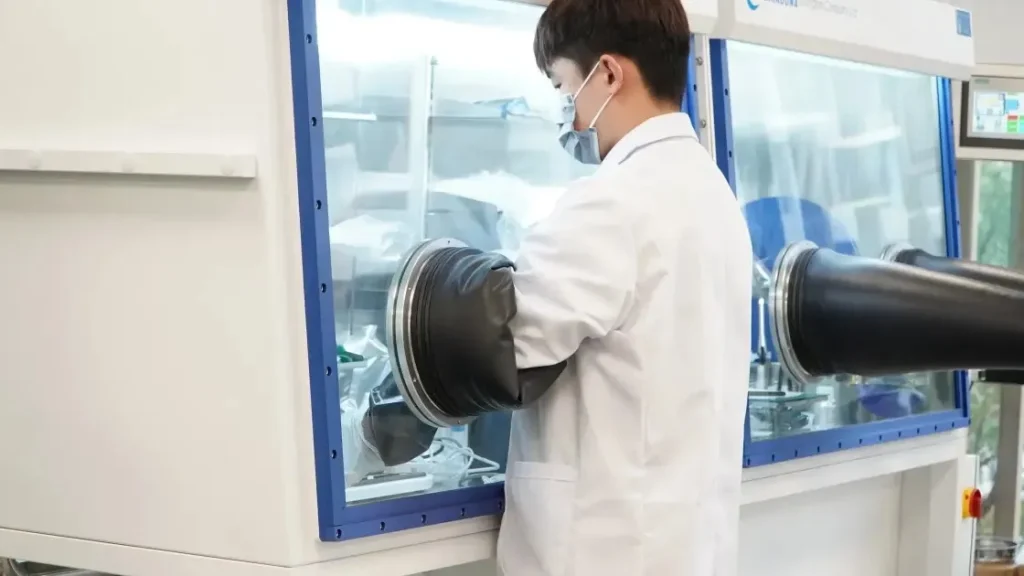
Surface Analysis Services
Understand what is happening at the surface, coating or interface. Anysis supports surface chemistry, morphology, topography, contamination, coating and depth-related investigations using complementary analytical techniques.
What Is Surface Analysis?
Surface analysis is the study of the outermost region of a material and the interfaces between layers. It is used when the performance problem is controlled by chemistry, morphology, roughness, contamination, coatings or thin films that may not be visible in bulk analysis.
The correct method depends on how deep you need to look, the size of the feature, whether chemical-state information is required and whether the sample can be sectioned or sputtered.
Questions This Service Can Help Answer
- What elements and chemical states are present at the outer surface?
- Is a residue, contamination layer or treatment affecting adhesion or performance?
- What do the morphology, roughness and defect distribution look like?
- How does composition change through a coating, thin film or interface?
Surface Analysis Capabilities
Surface problems can be chemical, physical or structural. The most useful investigation often combines more than one type of measurement.
Surface Chemistry
Measure elemental composition and chemical-state information from the outer surface.
- Surface elements
- Chemical states
- Oxides/treatments
Morphology & Imaging
Visualize surface features, defects, particles, grain structure and fracture-related details.
- Microstructure
- Defects
- Particles
Topography & Roughness
Measure height, roughness, step features and three-dimensional surface structure.
- Roughness
- Step height
- Feature dimensions
Coatings & Thin Films
Investigate film composition, thickness, uniformity and layer-related properties.
- Film chemistry
- Thickness
- Layer uniformity
Interfaces & Depth Profiles
Study how composition changes through layers or at critical interfaces.
- Depth distribution
- Interface contamination
- Cross-section analysis
Surface Contamination
Identify residues, oils, particles and cleaning-related contamination.
- Organic residue
- Particulate contamination
- Cleaning comparison
Typical Surface Analysis Techniques
The following methods address different surface questions and may be combined where appropriate.
Method selection is project-specific. Final technique, sample preparation and reporting scope should be confirmed before testing begins.
XPS
Initial visual and fracture examination
TOF-SIMS
Highly surface-sensitive molecular/elemental analysis
AES
Localized surface elemental analysis
SEM-EDS
Morphology and localized elemental composition
AFM
Nanoscale topography and roughness
Optical Profilometry
Non-contact surface height and roughness
Stylus Profilometry
Step height and roughness measurement
FIB
Localized cross-section preparation and imaging
Raman
Molecular identification on suitable surface features
FTIR
Organic films and residues
Ellipsometry
Thin-film optical thickness/properties
XRD / GIXRD
Crystalline phases in films where applicable
When Surface Analysis Is Valuable
The analytical scope should be tied to a real technical or business decision—not simply to a list of available instruments.
Adhesion Failure
Investigate why paint, coating, adhesive or laminate does not bond as expected.
Cleaning & Residues
Determine whether unwanted organic or inorganic material remains after cleaning.
Corrosion
Characterize oxides, corrosion products and surface chemistry associated with attack.
Coating Development
Compare surface treatments, film chemistry, thickness or morphology during R&D.
Semiconductor & Electronics
Investigate residues, particles, interfaces and thin-film process issues.
Good vs. Bad Comparison
Compare surfaces from passing and failing parts using matched analytical conditions.
What You May Receive
Surface analysis deliverables are designed to clarify the chemistry, morphology and structure of the outermost material region, coatings or interfaces relevant to your investigation.
Surface Composition
Chemical and elemental information describing the composition of the analyzed surface or near-surface region.
Images & Surface Maps
Microscopy images, elemental maps, topography or other spatial information where included in the analysis.
Layer & Depth Information
Coating, interface or depth-profile data showing how composition changes beneath the surface where applicable.
Surface Interpretation
Technical interpretation connecting surface characteristics with contamination, adhesion, treatment or performance questions.
From Your Question to Useful Results
The process begins with the decision you need to make, then defines the analytical scope, sample plan and deliverables.
Define the Surface Question
Clarify whether the concern is chemistry, morphology, roughness, contamination, coating or interface.
Select Information Depth & Scale
Choose methods based on depth, lateral resolution, sample size and feature dimensions.
Analyze the Surface
Perform the selected spectroscopic, microscopic, topographic or depth-profile measurements.
Correlate the Results
Combine chemistry and physical surface evidence to support the technical conclusion.
Surface Analysis FAQs
Clear answers about method selection, samples, project scope and analytical expectations.
Is the Problem at the Surface?
Tell us the material, coating or interface involved and what changed. We can help choose the appropriate surface-sensitive methods.
How deep does surface analysis measure?
Information depth varies greatly by technique—from the outermost nanometers for highly surface-sensitive methods to microns or full cross-sections for other approaches.
Which technique is best for surface contamination?
It depends on whether the contaminant is organic, inorganic, particulate or an ultrathin film. XPS, TOF-SIMS, FTIR/Raman and SEM-EDS may play different roles.
Can you measure surface roughness?
Yes, depending on feature scale and sample geometry. AFM, optical profilometry or stylus profilometry may be considered.
Can surface analysis investigate coating thickness?
Yes. Thickness methods depend on film type, thickness range, substrate and whether destructive sectioning is acceptable.
What is the difference between XPS and SEM-EDS?
XPS is highly surface-sensitive and can provide chemical-state information. SEM-EDS provides high-resolution imaging and localized elemental analysis from a deeper interaction volume.
Can you analyze interfaces between layers?
Yes. Cross-sectioning, depth profiling and localized analysis can be used to study selected interfaces, depending on the material system.
Do samples need special preparation?
Some methods require clean, dry, vacuum-compatible samples or size limits. Preparation must avoid altering the surface being investigated.
Can you compare a treated and untreated surface?
Yes. Matched analysis of treated/untreated or good/bad samples is often very effective for identifying meaningful surface changes.